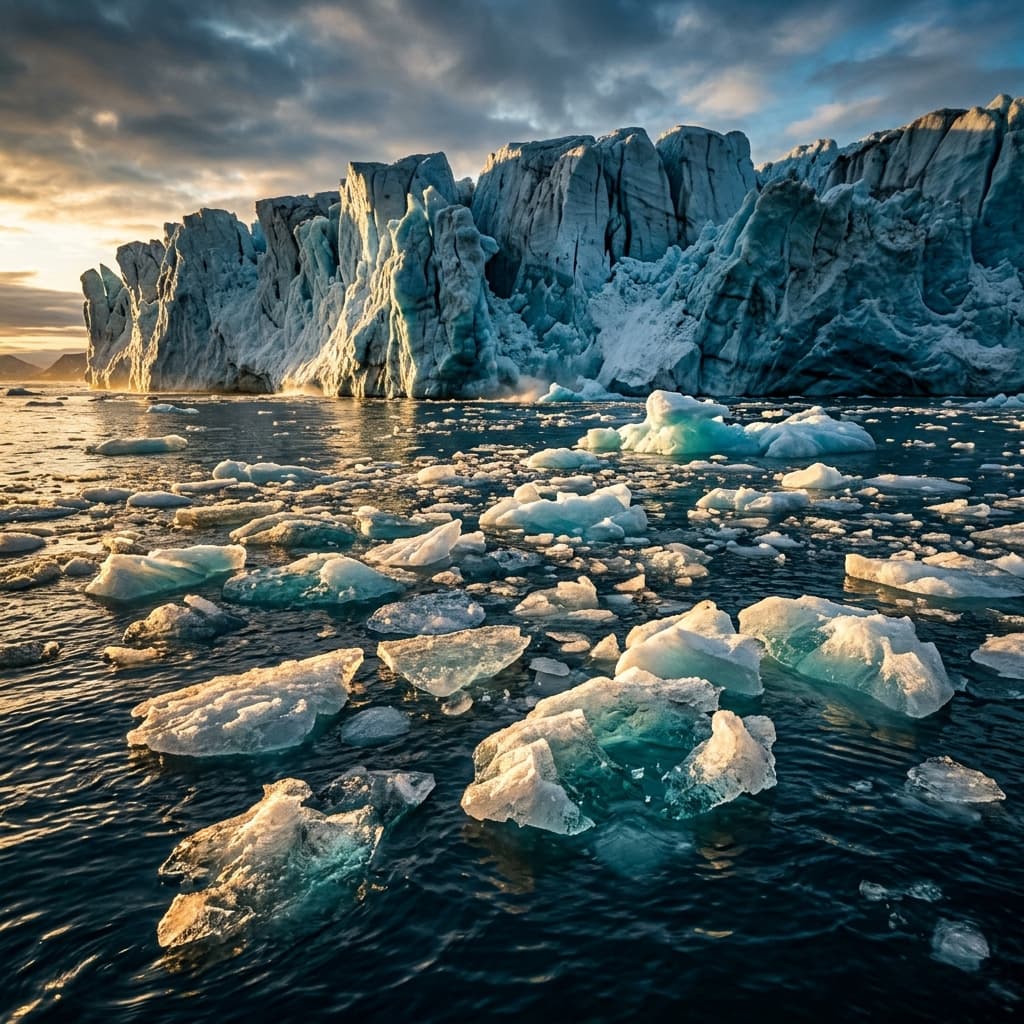
The Cascading
Reality of Ice Loss
The Cascading Realities
A deeply interconnected chain reaction. The loss of ice triggers irreversible shifts across the entire global ecosystem.
3x faster than global average.
Accelerated Warming
The Cryosphere is warming three times faster than the global average, signaling an urgent climate crisis.
50% melt by 2100.
Projected Melt
Half of the world's glaciers could disappear by 2100, threatening ecosystems, water supplies, and sea levels.
40% ice volume lost since 2000.
Himalayan Decline
Himalayan glaciers are rapidly losing volume, fundamentally destabilising regional water systems.
Over 2 billion lives at risk.
Water Insecurity
More than 2 billion people rely on glacier-fed rivers like the Ganges, Indus, and Yangtze for water and food.
Increasing GLOF frequency.
Glacial Flood Threat
Glacial lake outburst floods (GLOFs) are putting lives, downstream infrastructure, and economies at extreme risk.
Reduced Earth's reflectivity.
Albedo Loss
Melting glaciers reduce the planet's reflectivity, causing Earth to absorb more heat and warm even faster.
"Glacier Risk Is Systemic Risk.
When water infrastructure destabilises, entire systems spiral."
Economic & Livelihood
- $30B tourism losses projected by 2050
- 129M farmers depend on glacier-fed irrigation in HKH
- $200B ecosystem service value of glaciers in Qinghai-Tibet Plateau
Social & Human
- 27M displaced in Dhaka & Kolkata alone (1–3m sea-rise)
- Increased regional instability, migration, and conflict zones
Environmental Cascade
- 70% biodiversity loss over the last century
- Drastic alteration of flood timing, slope stability, and basin hazards
Cultural & Knowledge Loss
- Glaciers anchor identity and spiritual landscapes across HKH communities
- Loss erases traditional knowledge systems and causes ecological grief